Calling short courses 'microcredentials' is cringe

It’s time to call out the awkwardness of the Higher Education sector creating short courses and calling them ‘microcredentials.’ It’s like baking a cake and forgetting the icing, or putting a shiny label on an empty jar.
Yes, there’s a (crap) European definition of a “micro-credential” as “certify[ing] the learning outcomes of short-term learning experiences” which looks like it was written by an early version of ChatGPT, but even that acknowledges that “without common standards ensuring their quality, transparency, cross-border comparability, recognition and portability, micro-credentials cannot reach their full potential.”
I’ve realised that, just as some people won’t recognise my use of the iconic Socially Awesome/Awkward Penguin meme, so there’s plenty more who don’t realise that the history of microcredentials is based on the history of digital credentials:
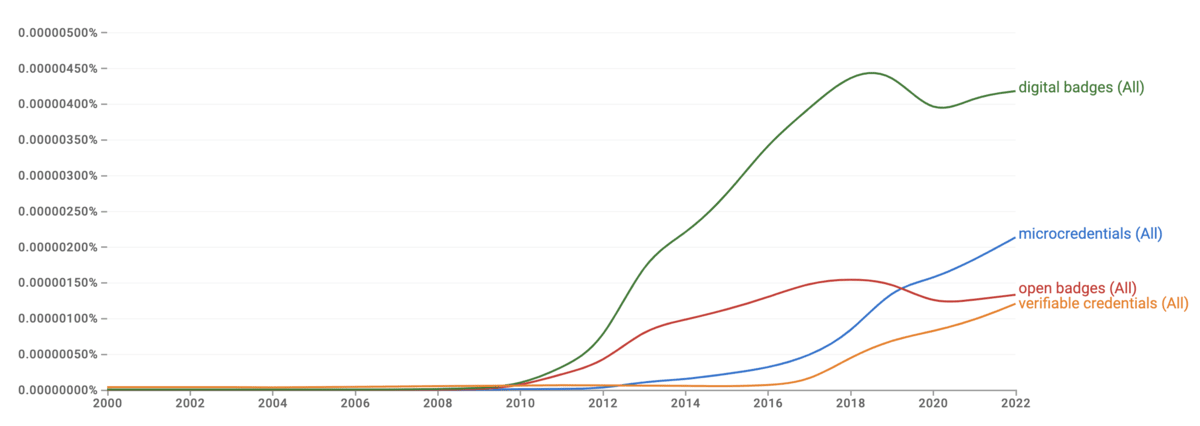
I’m not going to embarrass institutions by pointing to examples, but it’s super-cringe to provide online short courses and then provide ‘professional certificates’ at the end of it. We’re not partying like it’s 1999 any more. Come on, try harder.
This stuff really isn’t difficult. For example, you can just send your tech team to check out the Digital Credential Consortium’s Knowledge Base, which WAO helped set up! And there are loads of 1EdTech certified platforms if you don’t want to roll your own approach. Make sure they’re v3.0 compatible as that uses the Verifiable Credential data model.
Give me a shout if you need a hand, I’ve been doing this since those lines on the above graph started moving upwards. Let’s stop the cringe.