Choosing partnership over "certainty theatre"

In warfare, when you know more than your enemy, it's called information asymmetry. The idea is that you want to have a tactical advantage over your adversary so that you can defeat them. I would hope that an agency-client relationship is fundamentally different to this.
Why, then, don't we admit when we don't know things?
Whether it's the client who uses AI to create a confident-sounding brief (but doesn't fully understand all of the terms used in it), or the consultant/agency that promises everything will run smoothly according to their Gantt chart, I think we need to be a bit more honest with one another.
“Certainty theatre” is my way of giving a name to the pretence and performance that everyone knows exactly what's going on, is aware of everything that needs doing, and so let's just stop wasting time and get on with it.
The desire to avoid wasting money, protect reputations, and keep bosses and funders happy may be understandable, but it leads to over-confident briefs, shiny slide decks, and consultants/agencies promising that they fully understand what's required based on a couple of calls.
Performing certainty
I had a great call with a potential client recently, where we had an honest conversation about what's required, resources available, and staff attitudes. It's the reason I'm writing this post, as it was a breath of fresh air.
Instead of both sides overselling their experience and enthusiasm, there was a friendly but frank conversation about the state of their infrastructure, governance, and staff interest. That meant that I could talk about the importance of discovering what is required, to be under no pressure to over-promise, and to discuss risks upfront.
In my experience, when projects go badly, it's not usually because one side is lazy, incompetent, or greedy. It's usually because of a breakdown in communication – and that can start right at the beginning with the brief and the responses to it.
Big brands = big disappointment?
There is an old phrase in tech that “no one ever got fired for buying IBM”. While this might not be true any more about that particular company, there remains the reassurance that a big name consultancy is a safe option.
Is it, though? Large consultancies have frameworks and cookie-cutter approaches that treat engagements as being largely similar. They're less likely to co-work with clients, and more likely to put them through a process. The eye-watering budget clients close their eyes and agree to is buying the time they spend creating the shiny slide decks and case studies with recognisable logos. They're literally paying for, and encouraging, the certainty theatre.
Let's talk about ambiguity
Ambiguity gets a bad rap. As I've discussed before, there are strategic ways to use it and there are productive forms of ambiguity. As Yusuf Aytas points out, there are different 'maps' in play within organisations:
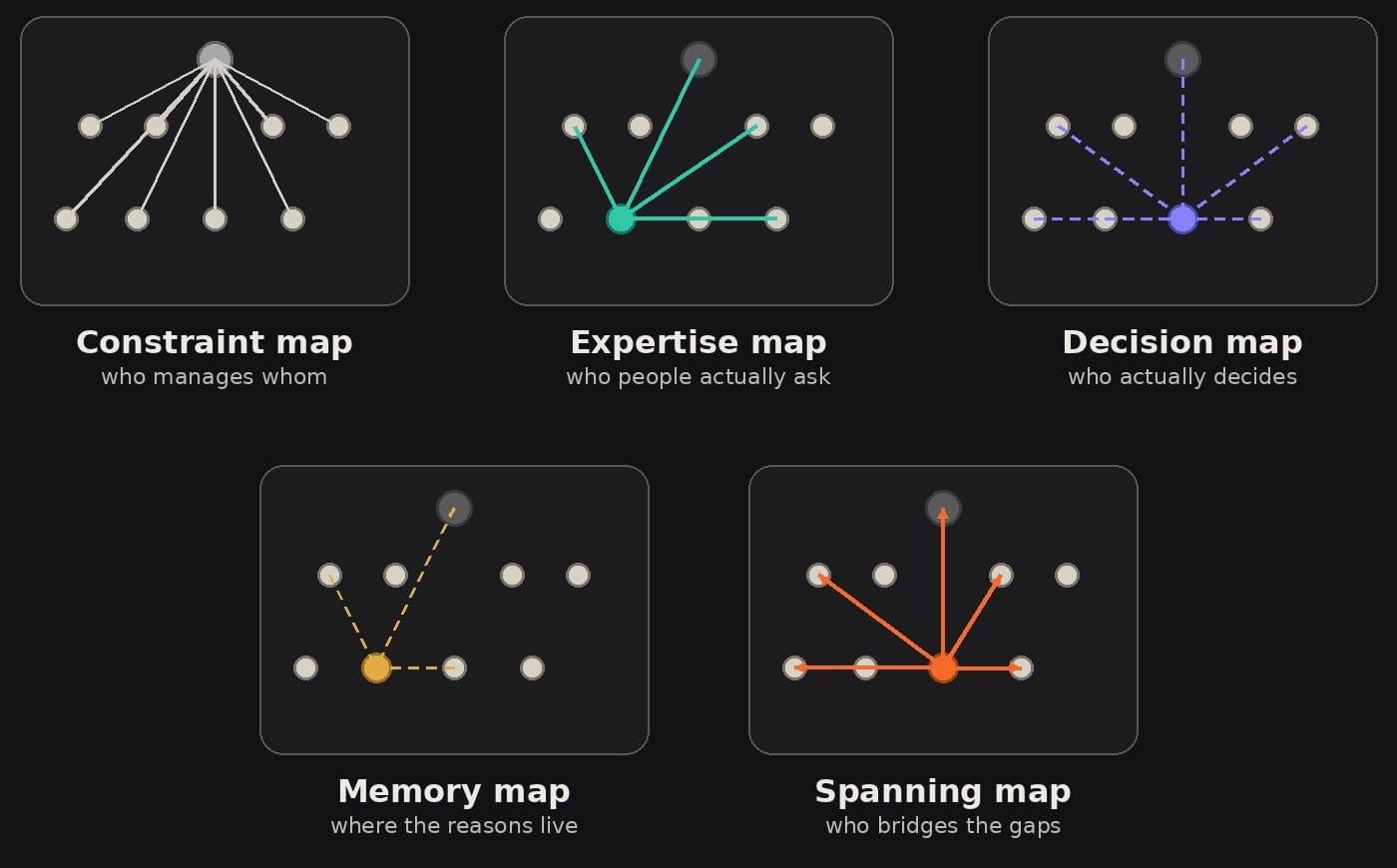
So an organisation simply putting out a brief and saying that they need a “digital transformation” consultant can mean very different things depending on the context. Where does the expertise actually sit within the organisation? How are decisions made? Who's remembering past scars? Who are the “gophers” getting things done and connecting teams?
A brief can look super-clear on one map, and be massively out of sync with others. This is why I talk about sitting in ambiguity for a while, rather than rushing to pretend that everything is aligned.
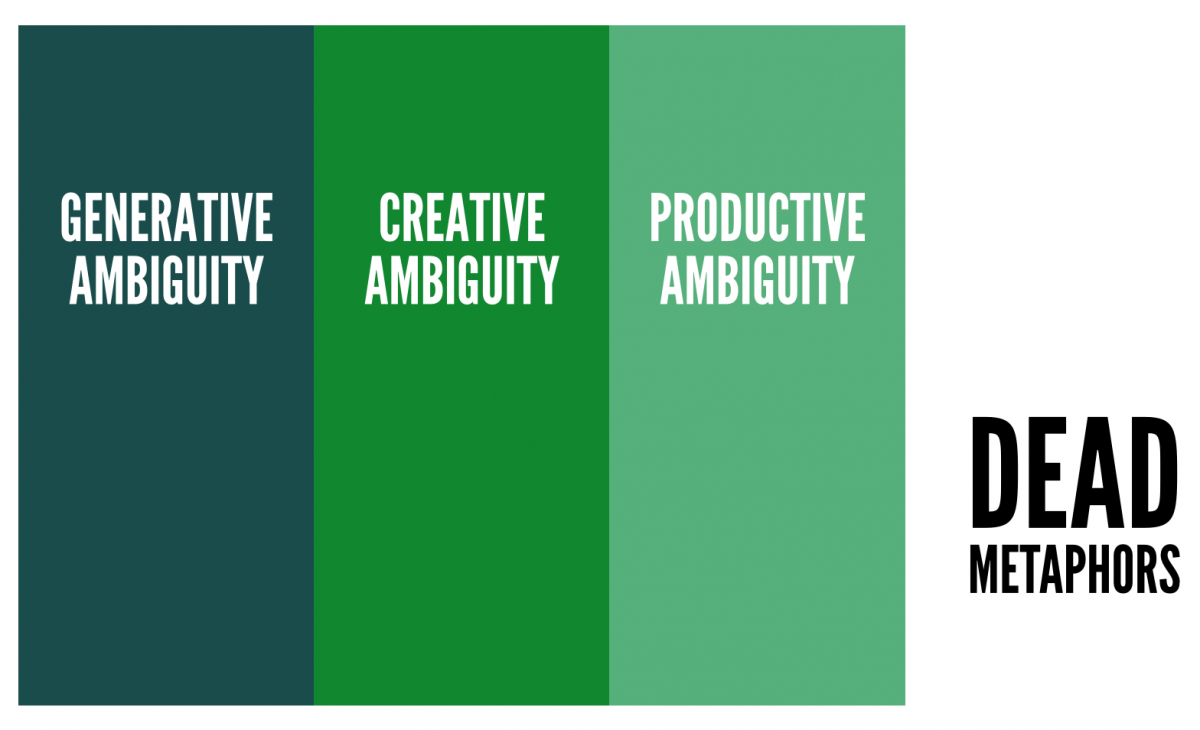
In the above diagram, something being vague would be off to the left. Dead metaphors are the overly-specific, cookie-cutter frameworks that big consultancy firms implement. The real work happens in the middle, particularly around productive ambiguity.
Productive ambiguity says things like: “We know we need to reach people who are currently excluded from our services, and we suspect digital could help, but we are not sure how yet.” It provides a way to start providing the boundaries, identifying the stakeholders, and noticing the feedback loops that are the start of a systems thinking approach to making positive change.
Partnership over performance
When I work with organisations, I explain from the outset that the relationship is a partnership and collaboration. That often means replying to detailed briefs with a suggestion that we do some discovery work together before deciding the shape of the rest of the project.
It doesn't make much sense to write a plan for one, two, or three years' worth of work from a distance, based just on what the organisation has told me. Along with whoever I'm working with, we need to understand the context. We have to map stakeholders, perform user research interviews, surface the constraints, and then figure out and co-create realistic options.
Co-working is absolutely central to this. Sitting together, usually virtually, to go through findings and feedbacks, while sometimes “messy”, changes the dynamic. It's difficult to perform certainty when we are literally all looking at the ambiguity together. I find that people have quiet realisations that they didn't quite understand or realise as much as they thought they did. That's not to say they were bluffing, but that their mental model was perhaps a little outdate or misaligned.
This is true from both sides. The agency/consultant needs to be able to admit that they're not entirely sure what the best next step might be; that there might be several options, and each has risks. That's why a period of discovery is so important. Instead of jumping straight in and checking off tasks, it's worth taking a step back and ensuring we're using the right shared maps.
How to avoid certainty theatre
I wrote this post partly to give a name to something I see regularly, but also to give some advice to people inside organisations who might want to try and avoid it. The easiest thing to do is to start asking different questions of yourself, your colleagues, and potential partners.
Questions to ask internally
- What are we really trying to change here?
- Where are we unsure, and how comfortable are we with that?
- What are we currently pretending is certain, just to make funders, trustees, or colleagues feel better?
- What time and attention can we realistically offer to co-working, testing, and learning over the next few months?
- Which “maps” does this work run on here? (e.g. who really holds the expertise, who really makes decisions, and what past project scars are we carrying into this?)
Questions to ask agencies/consultants
- How would you structure an initial discovery phase if we agreed not to fix a two-year plan upfront?
- Can you tell us about a time when you told a client that you were unsure? What did you do next?
- What assumptions are you making about our staff capacity and internal skills? How would you test/audit those?
- How would your approach change if our context turns out to be messier than the brief suggests?
- What would you not promise to do at this stage, and why?
The purpose of these questions is not to eliminate uncertainty or banish ambiguity. That's not the point. Instead, the goal is to move from “certainty theatre” to something closer to the kind of rigour you get from putting relationships first, from getting both clarity and confidence through partnership.
If this sounds like the kind of approach you're interested in, Dynamic Skillset is open for business. And I'm just as happy helping you figure out how to do the meta-work of getting partnerships and collaborations right as I am doing the project work itself.