5 ways of understanding the world at the end of 2025
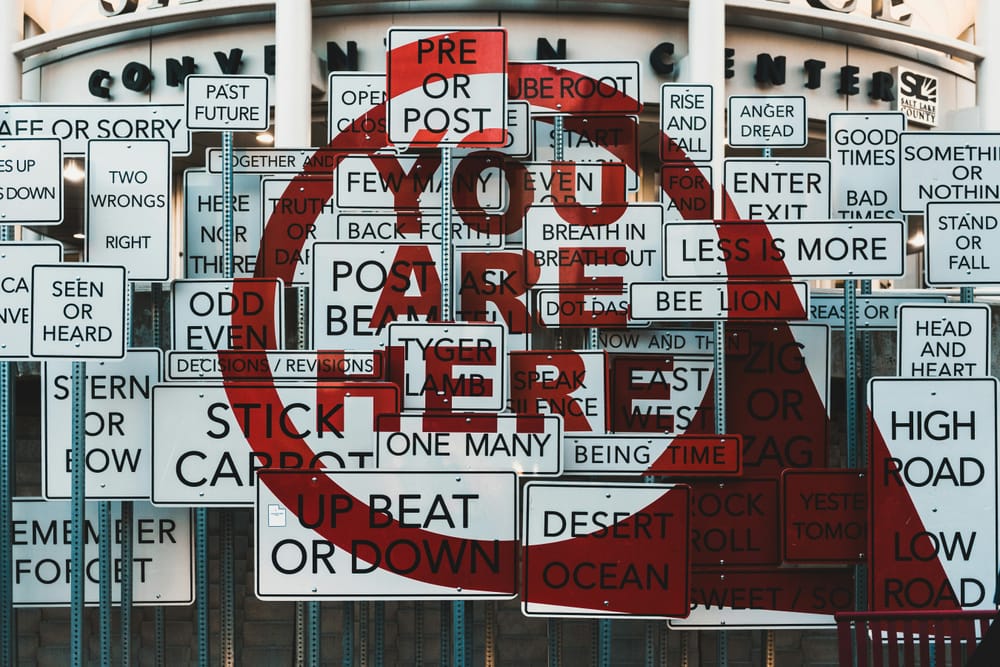
This post by Will Manidis is one of the best framings I've read of the current malaise that seems to be pervading Western society. It contains multiple overlapping analyses using the twin lenses of online gaming and internet culture.
 Will Manidis
It's really well-written, and resonates with me as a gamer and someone who tries to pay some attention to internet culture. However, it may not have quite the same resonance for readers unfamiliar acronyms with acronyms such as MMPORGs and PvP.
So my aim in this post is to pull out five choice quotations to back up my assertion that this is one of the best things I've read this year.
1. The world is digital-first
Just as you can tell that someone is approaching their 50s if they need reading glasses, so you can tell that someone grew up pre-internet if they talk about there being a 'real world' which is separate to what happens online.
If we think of our world as digitally mediated first and only incidentally physical, a lot of outcomes that used to look insane start to make sense.
It's 30 years this Christmas since I got my first computer and, in that time, we've gone from the internet being a super-geeky, fringe thing to it being the main way in which we interact and understand the world. As such, digital spaces are no longer dictated by physical norms; instead, physical spaces are dictated by the logic of the digital.
2. Identity is selectable
Talking of 30 years ago, while I was a teenager at the time, I also don't remember the news – and especially political news – dominating the general discourse to the extent it does these days. We seem to be defined by our positions on various topics and, instead of 'rubbing along' together, agreeing about some things and disagreeing about others, we turn everything into a culture clash.
By turning identity into something selectable, we have also turned it into a mechanism for self-assigned status in an intra-class struggle that one opts into. The contemporary news cycle presents almost every conflict in a compressed schema of victim and victimizer, oppressed and oppressor; the individual is invited to choose not only a heritage but a position on this spectrum that you chose and play out.
Trying to fashion and maintain a stable personality that is different to a pre-determined assigned role becomes increasingly difficult. You may be able to select your identity, but it's from a list that already exists.
3. Everything is gamified
I remember reading this from Audrey Watters last year about her Garmin fitness watch. In it, she pointed out that your watch doesn't 'know' your max heart rate or the zone you should be running in. Although never presented as such, it's all an approximation based on incomplete data.
The things we do in our flesh-and-blood bodies have also become digital-first. A hike doesn’t count unless it comes with a Strava record. Group-training gyms project scoreboards on the walls like video game leaderboards. Even churches now gamify attendance and prayer streaks. We’re willing to ignore discontinuity at the societal level to keep the campaign going, but at the individual level we refuse to accept anything that isn’t intensely quantified.
I value my 'sleep streak' badges and consider myself to be making great progress in Spanish because of my Duolingo streak. Even though I'm definitely tired, and when I went to Barcelona recently I could only understand a little of what I saw and heard.
But we like quantification and gamification. It feels like we're moving forward, despite the fact that we're doing so on someone else's terms.
4. It's tribal out there
In places where guns are legal, we're seeing an uptick in mass shootings and mobilisations based on ideology and worldview. In a digital-first world where people's first loyalty might be to people they have never met, taking to the streets is the ultimate proof of commitment to a cause.
Former safe zones—schools, offices, churches, neighborhoods—have become primary arenas of conflict, with every interaction carrying the latent possibility of being recorded, uploaded, and tried before a global audience.
While the news has always been partisan, this has been taken to the next level. Most people now receive updates about the world around them through the lens of social media. Given the algorithmic nature of for-profit social networks, which monetise attention and engagement, the emotion dial is ramped up to 11 every day.
5. There is not shared measure of value
As demonstrated by cryptocurrencies more generally, and meme coins in particular, the value of something depends on consensus. It has always been the case that how much something is 'worth' depends on how much someone is willing to pay for it – whether this be in terms of money, time, or effort.
However, in an increasingly atomised world mediated by corporations, the worth of something becomes how much it makes a difference to algorithms.
[A]ttention, status, even money itself feel increasingly unanchored from any shared measure of value. What matters is not what something is “worth” in a historical or moral sense, but how many hits, tokens, or basis points it can be transmuted into this week.
This is linked to the previous point about gamification: how willing are you to play the game? If your income, livelihood, and reputation depend on it, then you may not have a choice.
Conclusion: this is the new normal
I've attempted to pull out five points made by Will Manidis, the author of the original post. In doing so, my intention has been to strip out some of the specific language related to gaming and internet culture which some readers might not understand, while still presenting the same points.
The final quotation and analogy I want to include from Manidis, however, requires the use of this language. Likening those 'in charge' in society with those who are moderating internet forms such as a Reddit and gaming servers, he suggests that we need to understand that there are now not enough of these 'mods' to keep a lid on things.
In the meantime, the rational player assumes that the mods are not coming back, the rules will not be evenly applied, and that the only truly indefensible position is to keep following norms that no longer bind anyone else.
So what does this mean for the world as we prepare to enter 2026? Should we give up those "norms that no longer bind anyone else"? It's worth thinking about what shared culture, especially from a historical or moral point of view, even means any more.