Introducing Commonplace
Commonplace is a resource collection manager for the open social web. Organise links and uploads by topic, invite collaborators, and share collections with people on Mastodon, Bluesky, and RSS – without asking them to sign up anywhere new.
Walkthrough
In the video below I provide a tour of Commonplace, and at the end talk about how you can install it for your own community or organisation.
The vision (and a bit of history)
Long-time readers may remember that, from 2018 to 2020 I was Product Manager of MoodleNet (archive link). It was conceived as an open social platform for educators, with communities forming around shared interests and curating open content.
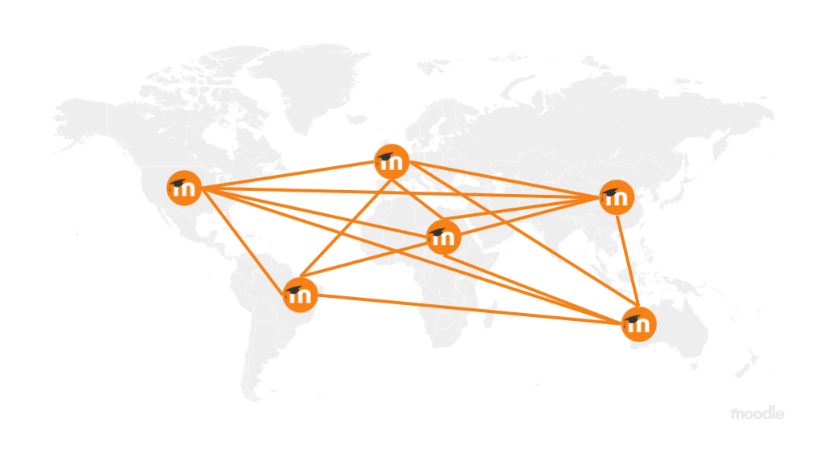
When I moved on from Moodle, the team decided to as well. Bonfire grew out of that work, starting life as a fork of the open source codebase underpinning MoodleNet. They experimented with what they described as “a federated app toolkit,” and which is now framed more simply as building blocks for communities. Instead of just being a single product, Bonfire is modular, providing different “flavours” that you can assemble with the features you want.
In stark contrast, the current Moodle.net service that replaced the MoodleNet I product managed is simply a repository of Moodle-related resources. It is not a federated social platform. When I idly stopped by the site a few of weeks ago, I saw that it is being discontinued on 20 April 2026 (next Monday!)
That closure notice was the nudge I needed: it reminded me that I still care about the original vision of communities curating collections of resources.
Commonplace: taking a different approach
My first attempt was to create something called Bonfire Bridges. I got reasonably far in my experimentation. But, after then playing about with a tool relating to my Are.na bookmarks and collections, I realised that I could go about this a different way. I could make things a lot simpler, and instead of people creating new accounts, they could sign in with their existing accounts.
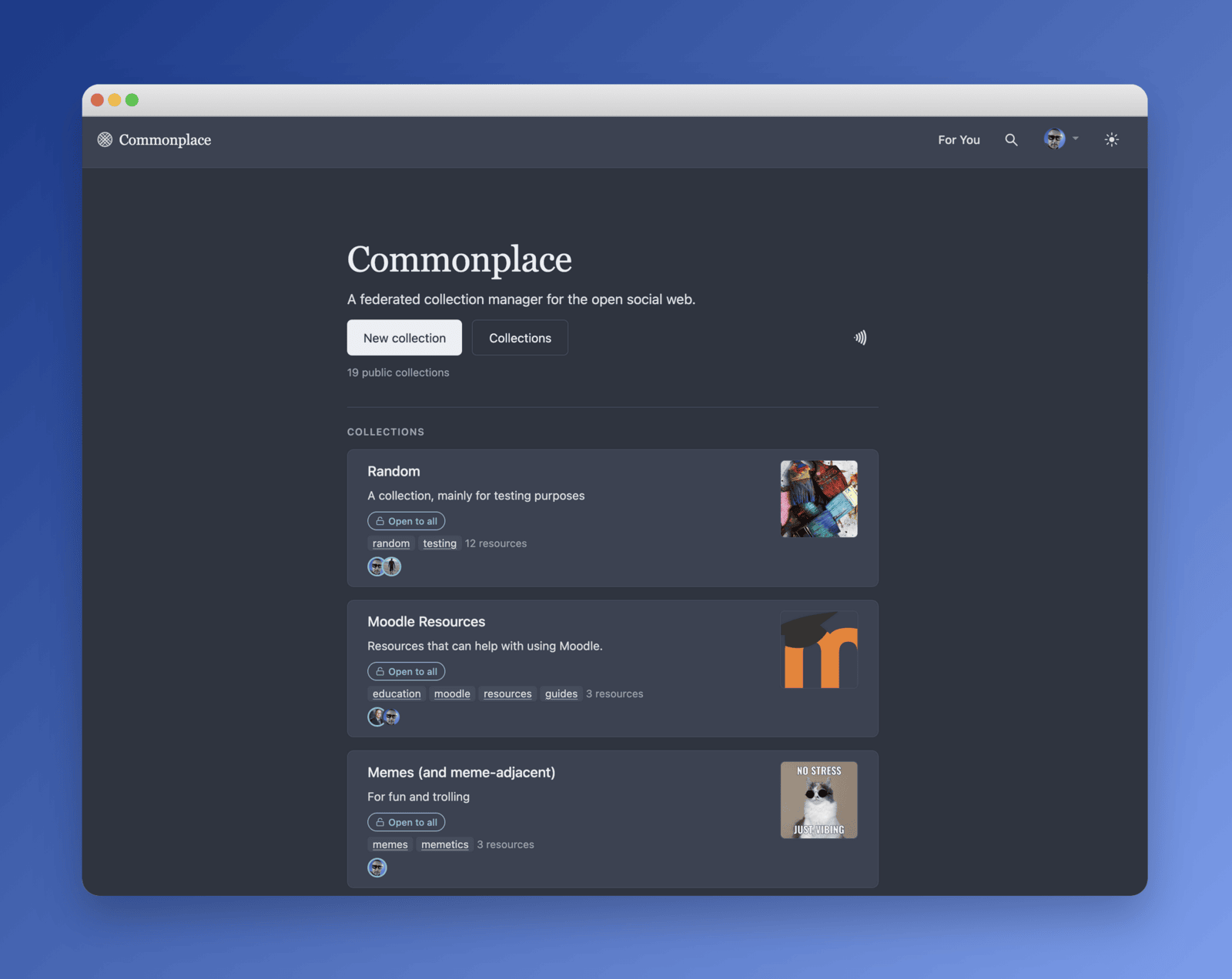
I ended up with Commonplace, which is built in Go as a single binary that you place on your server. Literally anyone can install it. There's a public demo site and a code repository where you can figure out how to get yours set up.
What might you use this for?
- Teaching & learning – Share reading lists with your students by creating a collection for each course or topic. Students could follow it from Mastodon or subscribe on Bluesky. New readings would appear directly in their timeline, alongside everything else they follow.
- Research – Maintain a living bibliography by adding papers, articles, and data sources as you find them. Colleagues can follow the collection from any ActivityPub client, or via an RSS feed for feed readers.
- Community curation – Build shared reference lists together, Inviting co-curators by their username. Anyone can propose links, even by replying from Mastodon. Curators can approve or dismiss proposals without leaving the interface.
With MoodleNet and Bonfire Bridges, the complication was communities spanning multiple instances. In contast, with Commonplace, the community is the instance you join. You login with your existing Fediverse, Bluesky, or IndieWeb account, and collections live on that site. That keeps the mental model simple but also means everything is federated.
Once you've signed in, you can create collections and curate them yourself. Or you can invite others as curators, so long as they've logged in at least once on that instance. Collections are made up of links, which you can add directly or import via HTML, CSV, or OPML, and Creative Commons-licensed resource uploads
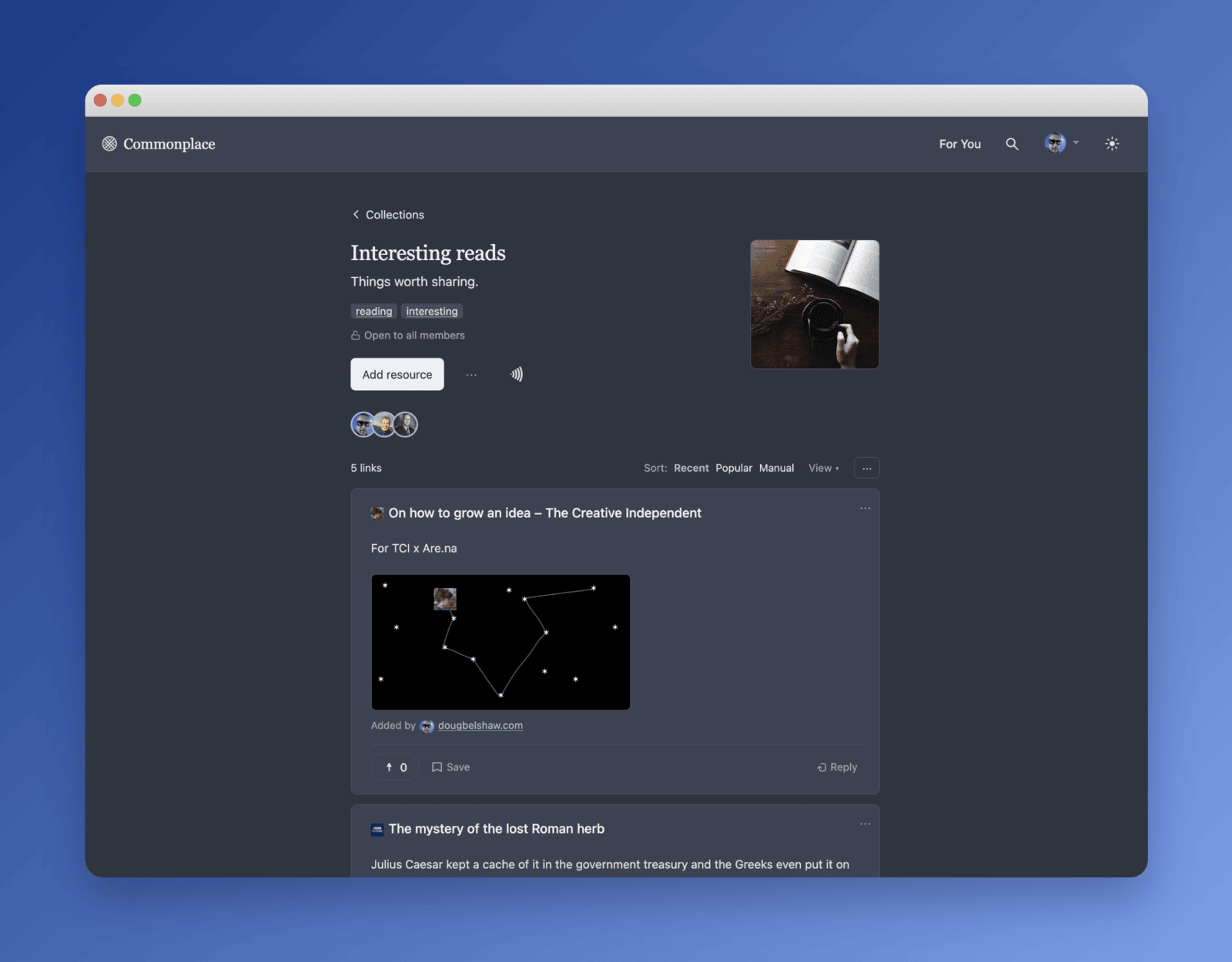
You can follow any public collection as resources are added to it from Bluesky or Fediverse accounts. This means that curation on a small instance can still be visible in larger networks.
You can add resources to any collection that you are a curator of. You can also suggest links to curators of other collections. that means that participation isn't limited to a small group of admins.
For something so new, there's a lot already in place. That's because I've done so much thinking on this subject over the years! The main things to sort out early relate to federation and abuse-prevention, so here's what's implemented that you might not be able to see in the user interface:
- Federation working (ActivityPub / ATProto)
- Moderation tools (flagging / review)
- Email notifications to admins
- A code of conduct
- Abuse reporting and URL blocklisting for resource submissions
I'll admit that the bookmarklet tool to allow you add things quickly from your browser still needs more work. The current UI could probably also do with a bit more polish, but the fundamental shape of what I'm trying to achieve is in place.
What's next?
I've got plenty going on at the moment, with client work and WAO closing, so I'll work on this when I can. On the near-term roadmap, I'd like to get to:
- Collection forking – cloning a public collection into your own so you can adapt it
- File attachments – not just links, for when you want the artefact to live with the collection
- Federated search – so that instances can surface each other’s public collections in a useful way
I'm sure this list will probably grow as other people start using it and point out things that are missing, confusing, or... just wrong.
Get involved!
The biggest test for something like Commonplace is, of course, whether anyone else chooses to run it. I would love to see other instances appear. It might be a testbed, a pop-up instance for a course or project, or a longer-term experiment around a niche interest.
If spinning up your own instance is something you're interested in doing, or if you would like to collaborate on the next stage of the work, please do get in touch. If you're in a position to fund further development, that would be amazing. It would change both the pace and scope of what we can try.