Why digital literacy != the 'aftermath' of literacy
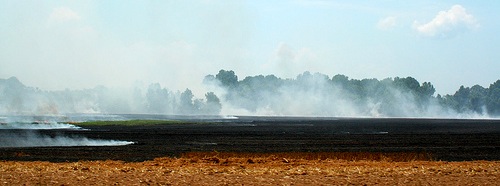
Image by lucianvenutian @ Flickr
We don’t own a dishwasher. Logic and social norms would suggest we should: they save time, we can afford one, and there’s currently an unfilled gap for one in the kitchen at our new house. We don’t have one for several reasons, but perhaps the biggest one is what marketers would deem a ‘lifestyle’ choice. We’ve found that washing-up manually has several benefits, not least either a) social interaction (if one of us washes and one dries) or b) contemplation and slowing-down if done alone.
I can remember in our first year of marriage living in Gateshead and washing up whilst listening to Kings of Convenience and watching the queues of traffic with their white headlights and red tailights cross the various bridges that span the River Tyne. Now, my view’s somewhat more prosaic, but I still appreciate the time that washing-up manually gives me. Coupled with the time I spend in the shower, it allows me to collect, reflect upon, and synthesize my thoughts.
It was during one of these moments that I realised that the concept of ‘digital literacy’, the term I’m investigating as part of my Ed.D. thesis at the University of Durham, is, in a way, linked to the word ‘aftermath.’ The latter is an everyday word (and has been for a long time), being used for everything from parties to the War on Terror. Aftermath did, however, once have a very precise meaning – which not even Google lists.
Thankfully, dictionary.reference.com manages to nail it:
[A] new growth of grass following one or more mowings, which may be grazed, mowed, or plowed under.
…as does thinkexist.com:
A second moving; the grass which grows after the first crop of hay in the same season; rowen.
This second crop would be forced by the farmer by burning the stubble left after the first crop was harvested – a familiar sight in Northumberland during my childhood. The burning put nutrients back into the soil ready for the next crop. As a result, the word ‘aftermath’ became synonymous with destruction and with burnt fields akin to the Harrying of the North. The term is now used indiscriminately to simply mean anything remotely negative that happens in the wake of an event.
I think the same has become true of the term ‘literacy.’ It used to have a precise meaning involving reading and writing using hand-written or carved letters. I believe that, just as sentences including the word ‘aftermath’ are devalued to an extent because of abuse of the term, discussions building upon ‘literacy’ – and especially its derivatives such as ‘digital literacy’ – have diminished explanatory power because of indiscriminate use of the term.
The question is, do we jettison the term or rescue it? :-p
![Reblog this post [with Zemanta]](http://img.zemanta.com/reblog_e.png?x-id=3bb0bd52-9bec-482a-8448-b6601e0694ae)